




















Blanking coil line Schleicher CTL 4.090
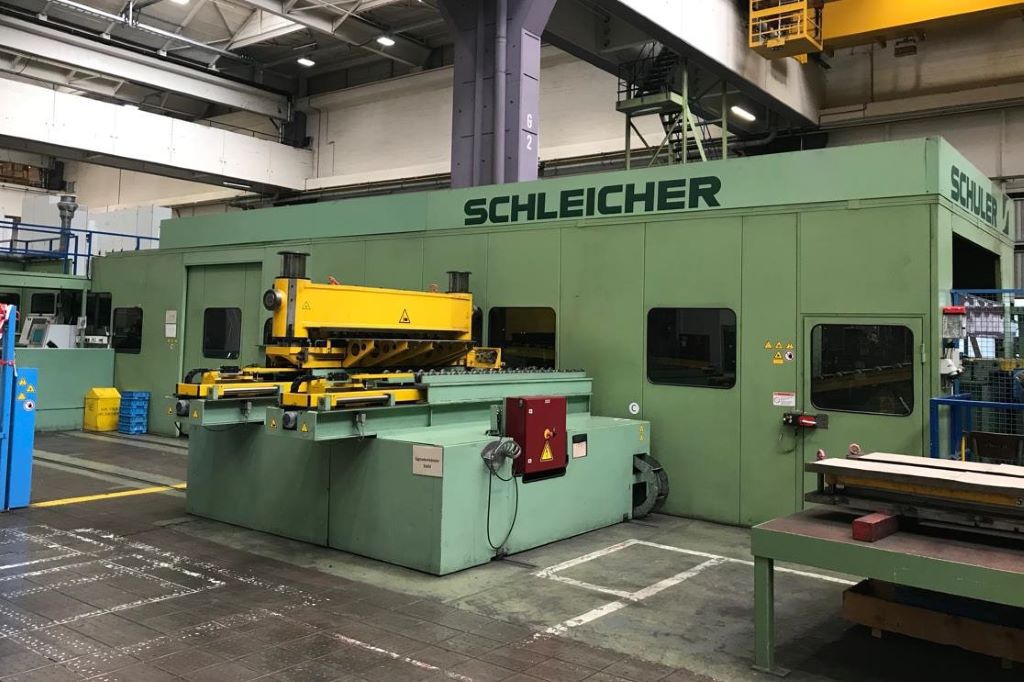

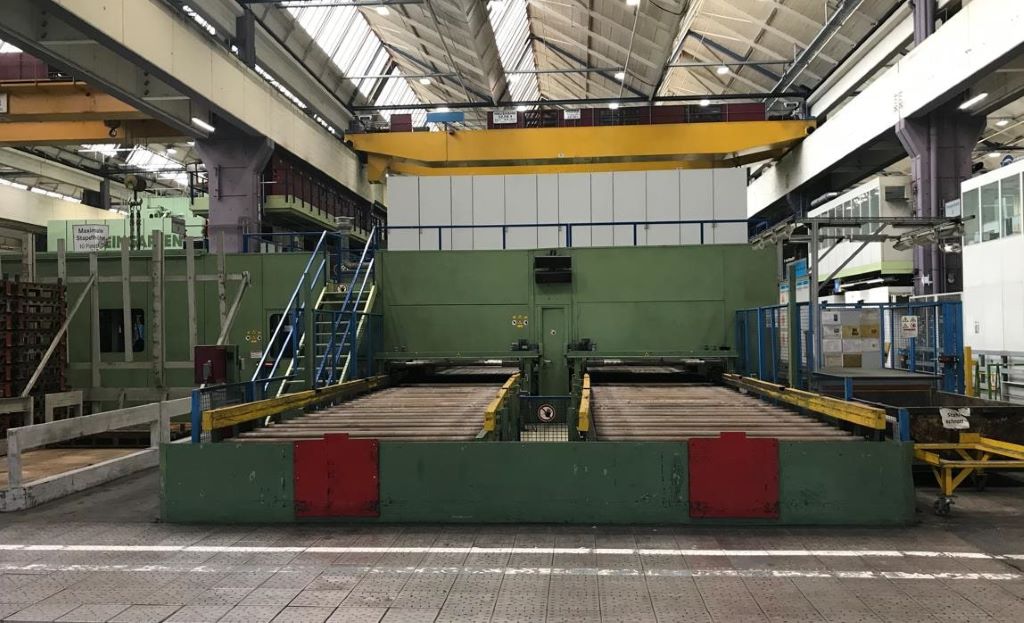


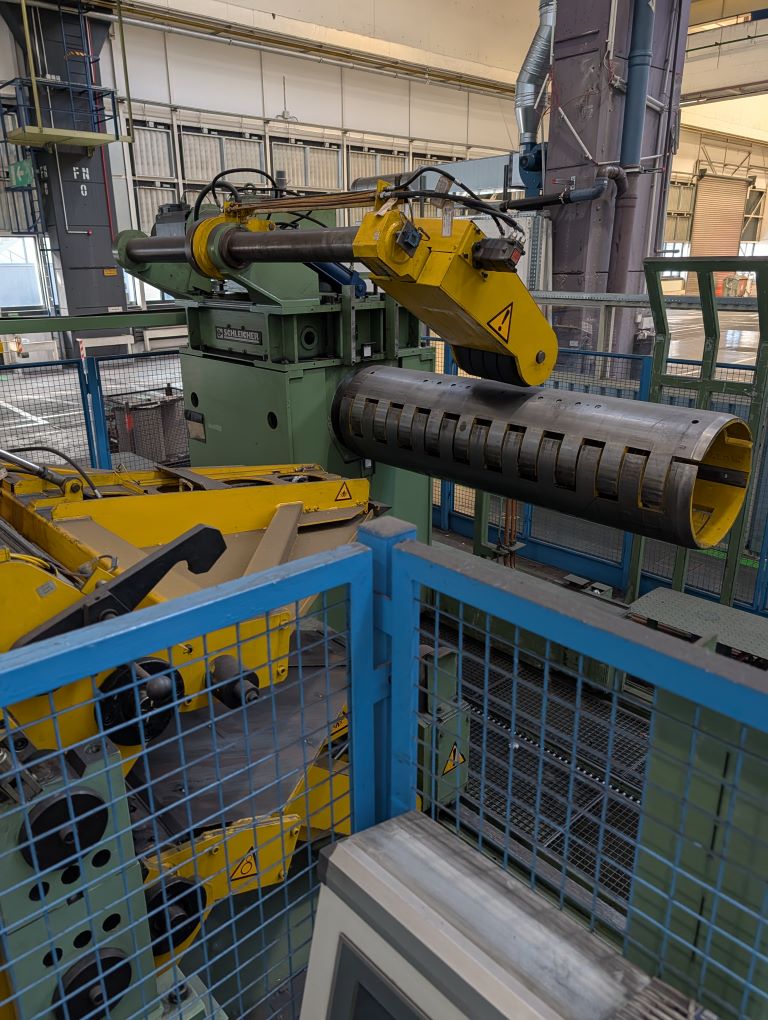
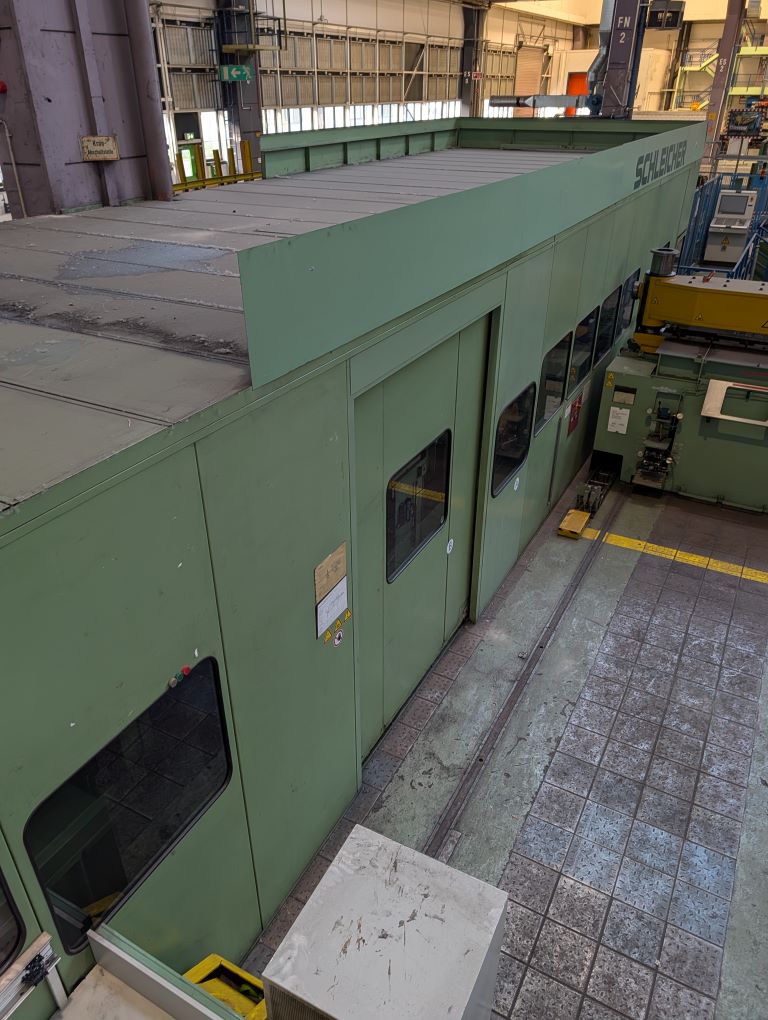
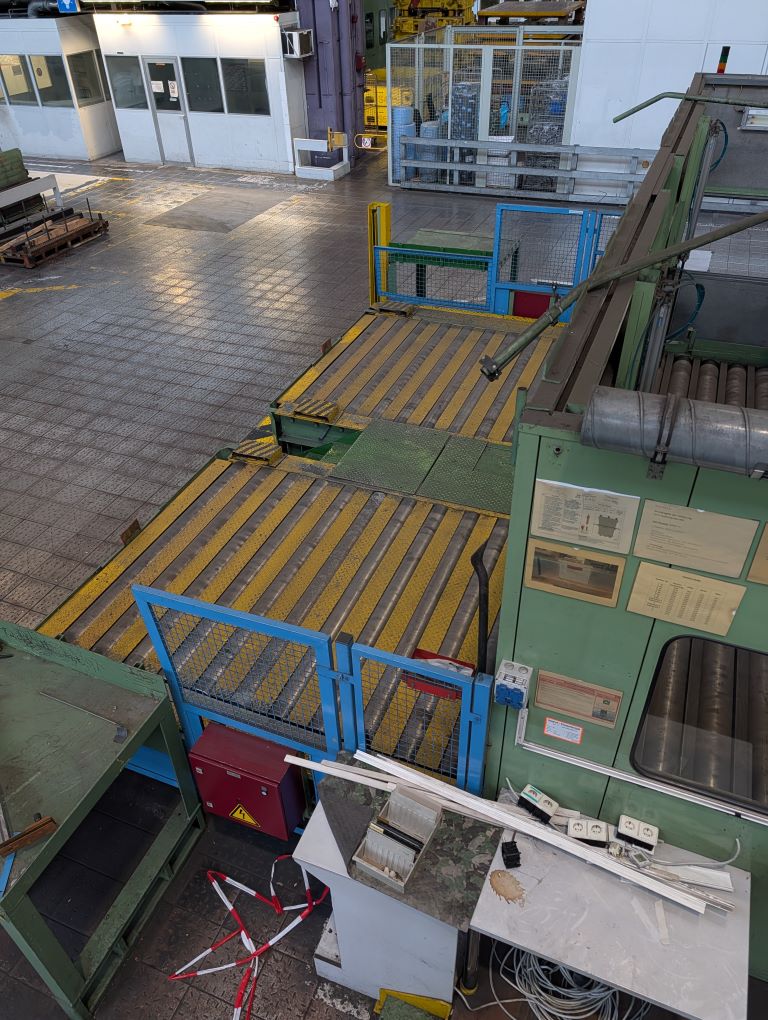
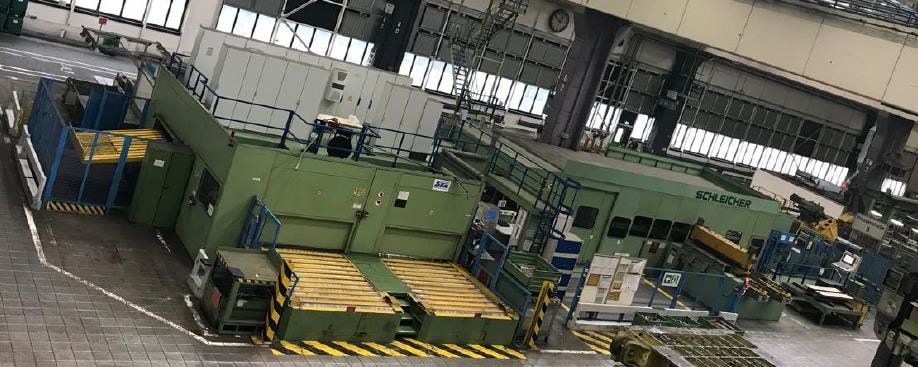
Schleicher CTL 4.090 blanking coil line - description
Technical specifications Schleicher CTL 4.090 (ID:76357)
| Type | Blanking coil line |
|---|---|
| Manufacturer | Schleicher |
| Model | CTL 4.090 |
| Tensile strength | 1000 N/mm² |
| Yield strength | 800 N/mm² |
| Strip width min. | 500 — 2000 mm |
| Thickness of strip min — max. | 0.6 — 2.0 mm |
| Maximal coil weight | 35.000 kg |
| Coil outer diameter min. | 800 mm |
| Coil outer diameter max. | 1900 mm |
| Maximum strip cross-section for steel | 2000 x 2.0 mm² |
| Max. sheet crowning in direction of flow | ±10/1000 mm |
| Swivel cutting angle range max. | ±15° |
| Swivel angle infinitely adjustable. | ±15° |
| Band width for straight cut | 500 — 2000 mm |
| Band width for bevel cut 15° | 500 — 2000 mm |
| Band width for bevel cut 30° | 500 — 1800 mm |
| Blade length approx. | 2150 mm |
| Cutting length, not stacked | 90-250 mm |
| Cutting length, stacked | 250-2000 mm |
| Cutting shape | Rectangle, Parallelogram, Trapezoid |
| Discharge to container after the shear | min. 90 mm |
| Maximum length | 2000 mm |
| Setting accuracy | 0.1 mm |
| Adjustable feed length | 0.1-9999.9 mm |
| Desired feed length | 90-2000 mm |
| Feed accuracy | ±0.2 mm |
Please note: Specifications are indicative and subject to final confirmation. For current availability and price, as well as photos and technical details, please contact us.
Blanking Coil Line Schleicher - technological processes and operations
| Blanking | Blanking at the workpiece preparation stage solves the task of separating a piece of metal from the entire sheet or strip along a closed contour. What matters here is not so much edge quality as speed and material savings — the blank will undergo further processing anyway. |
|---|---|
| Decoiling | Uncoiling releases the metal strip from the roll and feeds it into the processing line at a set speed and tension. The operation ensures continuity of the production cycle and correct positioning of the strip before stamping. The rhythm of the entire production and the quality of subsequent operations depend on the stability of feeding. |
| Shearing | Metal is cut along a straight line by the shear action of cutting edges. The process is fast, requires no heating or complex tooling. Used for cutting sheets and strips into blanks prior to further stamping. |
| Straightening | Sheet or strip metal is rarely perfectly flat after rolling and transportation. Straightening eliminates curvature, waviness, and internal stresses by passing the metal through a system of staggered rollers. After such treatment, the workpiece obtains flat geometry, which is critically important for precise stamping. |