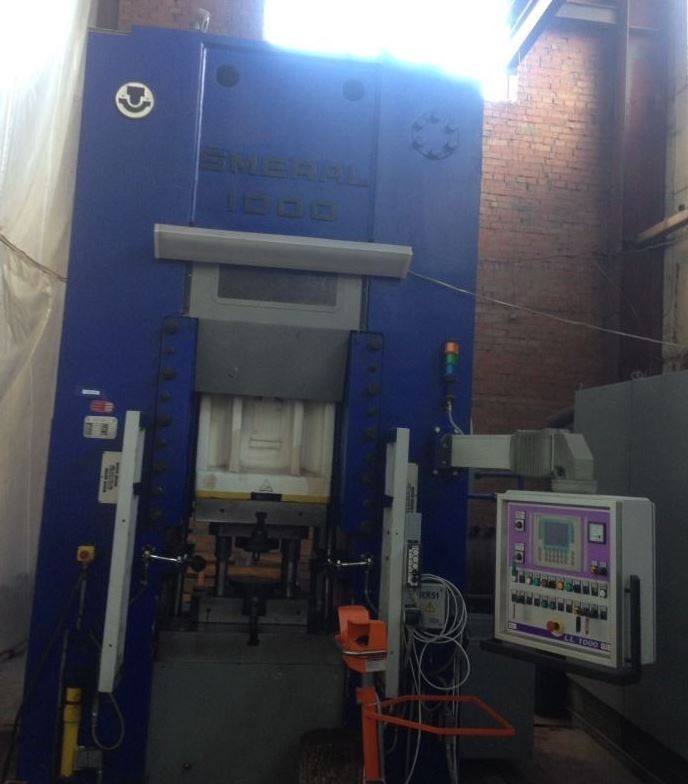
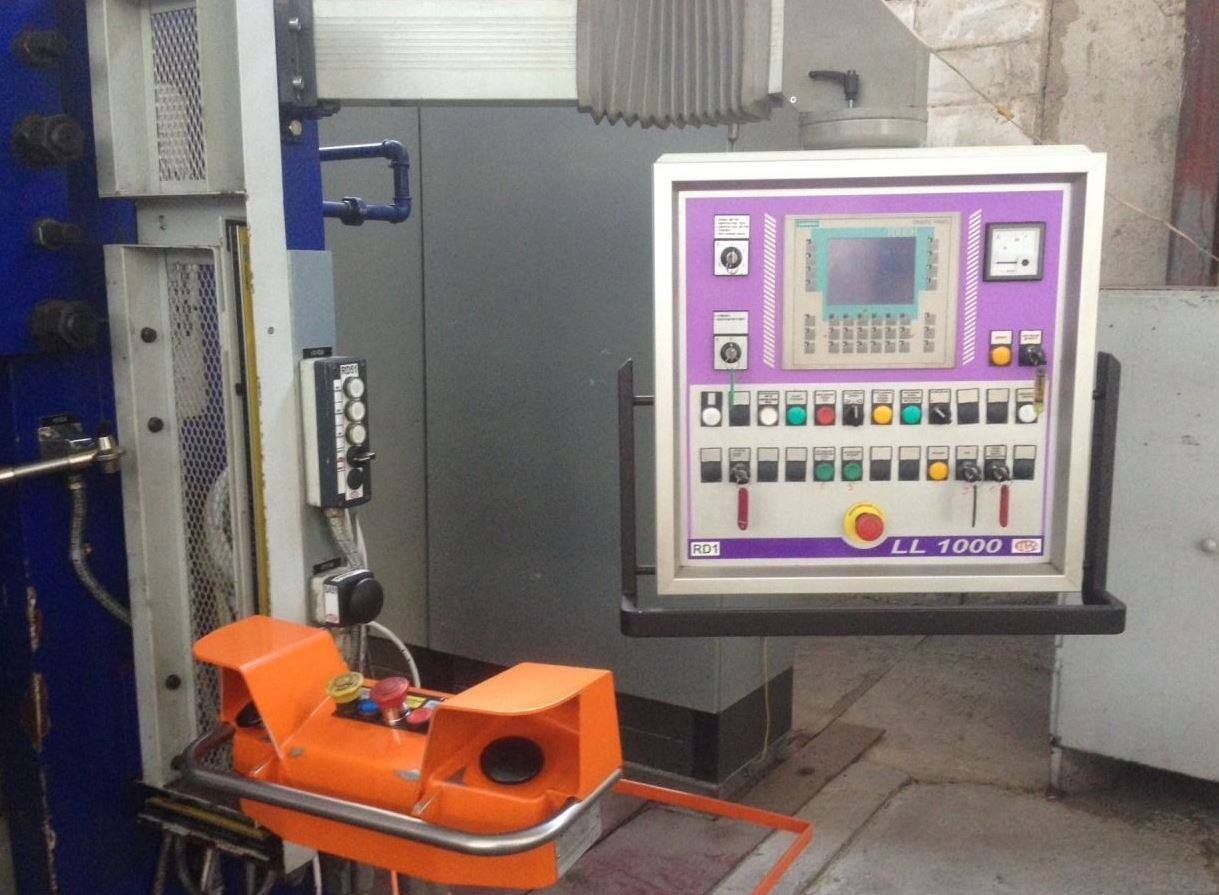
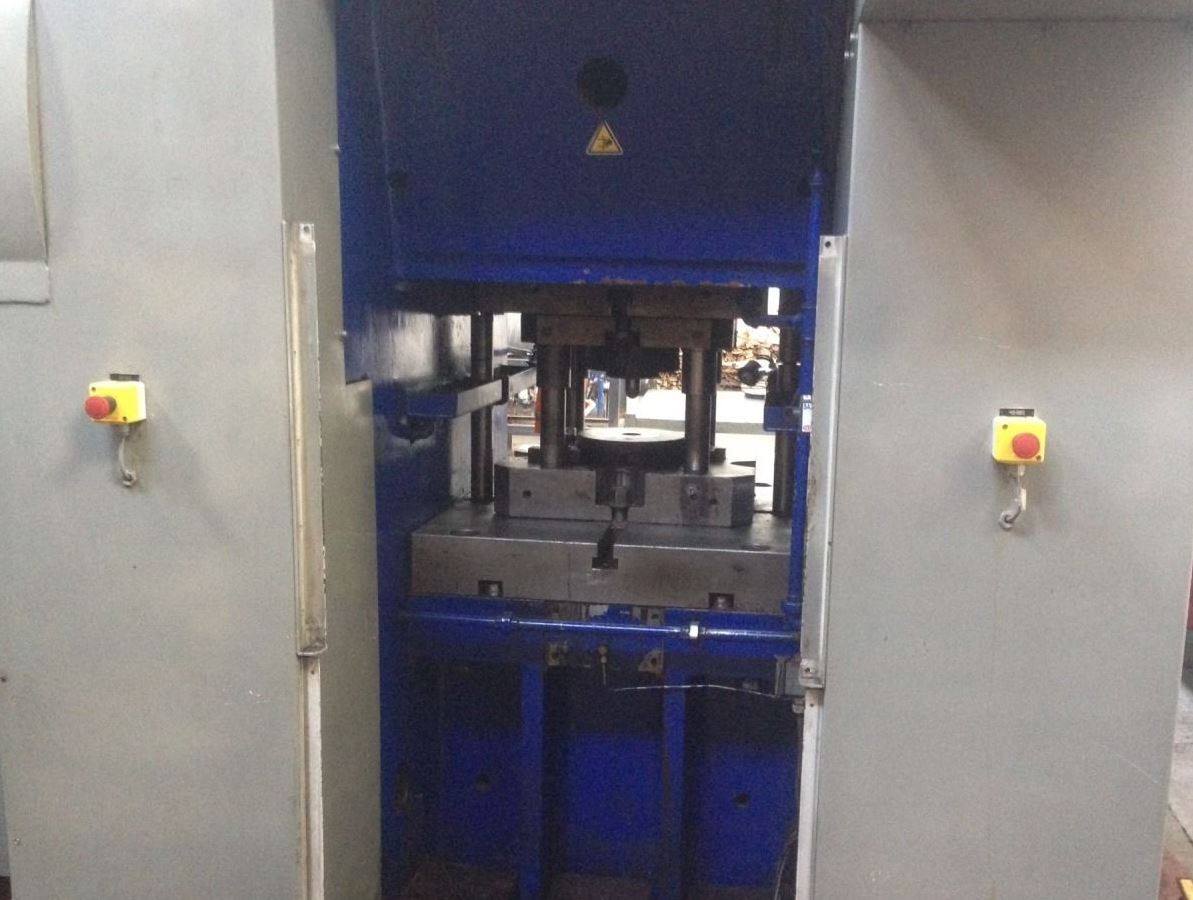
| Coining | Under enormous pressure, the die is pressed into the workpiece, forcing the metal to distribute into the smallest recesses of the tool. As a result, clear reliefs, inscriptions, or patterns are formed on the surface with high accuracy. The metal fills all details of the die, fully reproducing its geometry. Used in the production of coins, medals, and precision parts where relief clarity and dimensional accuracy are essential. |
|---|
| Calibrating | A finishing operation that brings the forging to precise dimensions. The workpiece is placed in a calibration die, where under pressure its surface is leveled and the geometry is brought to the specified tolerances. This process eliminates minor shape distortions left after previous operations. As a result, the part receives stable dimensions and a smooth surface without additional machining. |
|---|
| Sheet stamping | Sheet stamping is a class of operations for forming parts from sheet material using dies. The workpiece is deformed in the tool without significant change in thickness, acquiring the specified shape. This group includes blanking, punching, bending, drawing, and other processes performed on presses. Sheet stamping is the foundation of mass production of body panels, housings, and other thin metal parts. |
|---|
| Punching | Punching holes in sheet metal is performed in a die: a tool with sharp edges passes through the workpiece, separating material along a closed contour. The process is fast and precise, leaving no burrs when properly set up. Used for producing holes, slots, and cutouts in sheet metal parts. |
|---|
| Blanking | Blanking a part from a sheet along a closed contour is performed on a press using a blanking die. The tool passes through the material, separating the finished part from the sheet. The accuracy of the contour and the cleanliness of the edge determine the quality of the final product. |
|---|
| Bending | Bending gives a sheet blank an angle or curvature. The metal is bent in the die under the force of the press: the outer layers stretch, the inner layers compress, and the middle retains its original length. The operation allows producing parts with the specified geometry without changing the material thickness. |
|---|
| Cutting | Separation of material into parts using a cutting tool. Depending on the task, cutting is performed on presses, shears, or special machines, separating the workpiece from a sheet, strip, or bar. The operation provides workpieces of the required size for subsequent forming. |
|---|