




















Radial forging machine Neagari Shibuya BF-350 — 500 mm
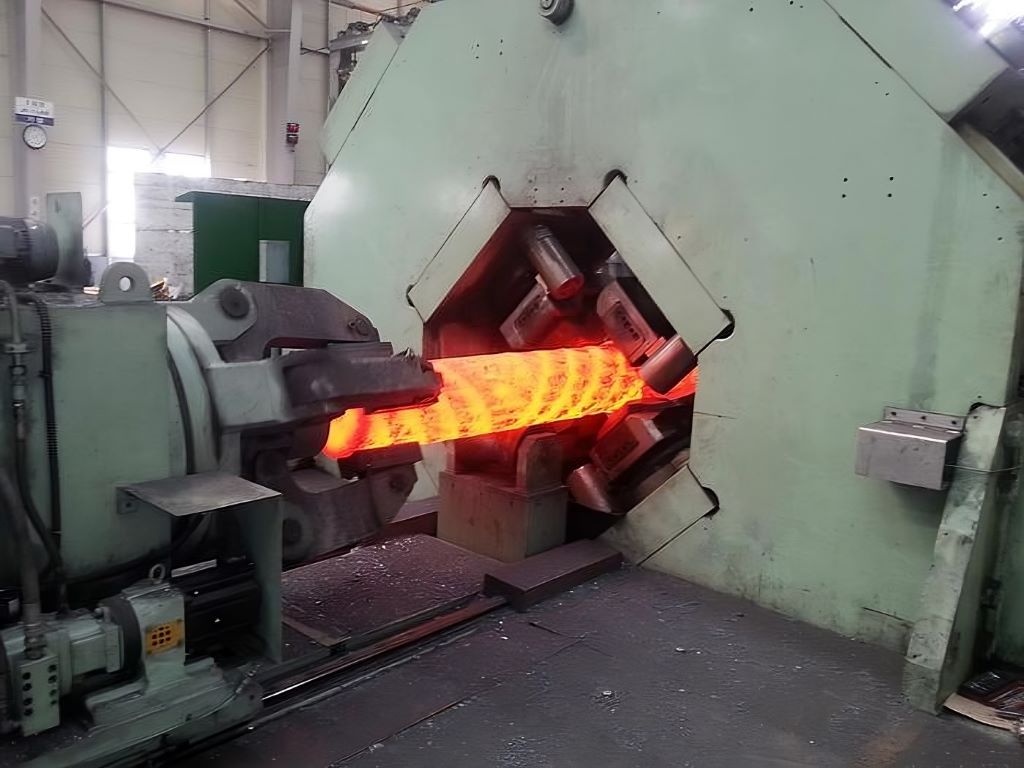
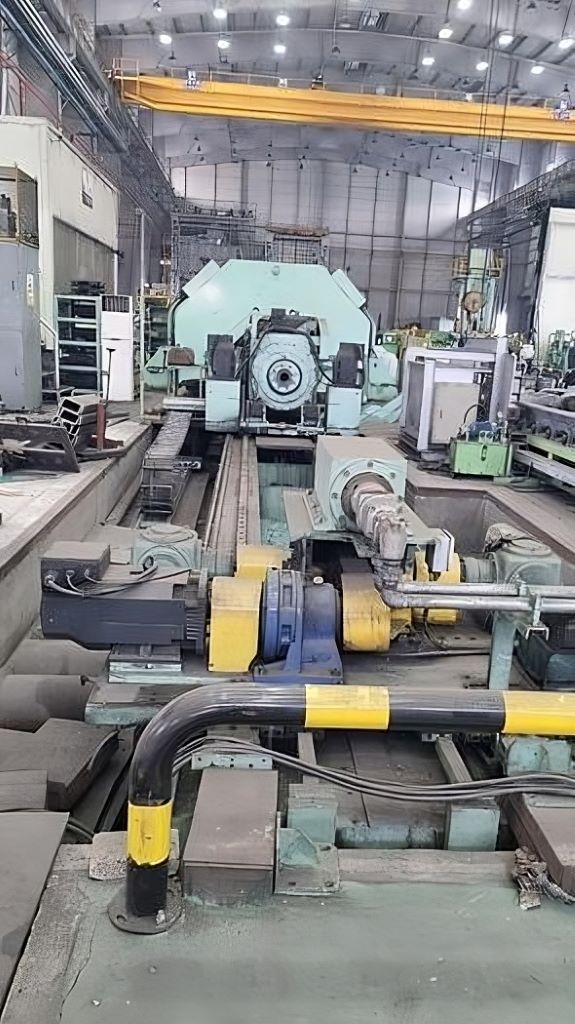
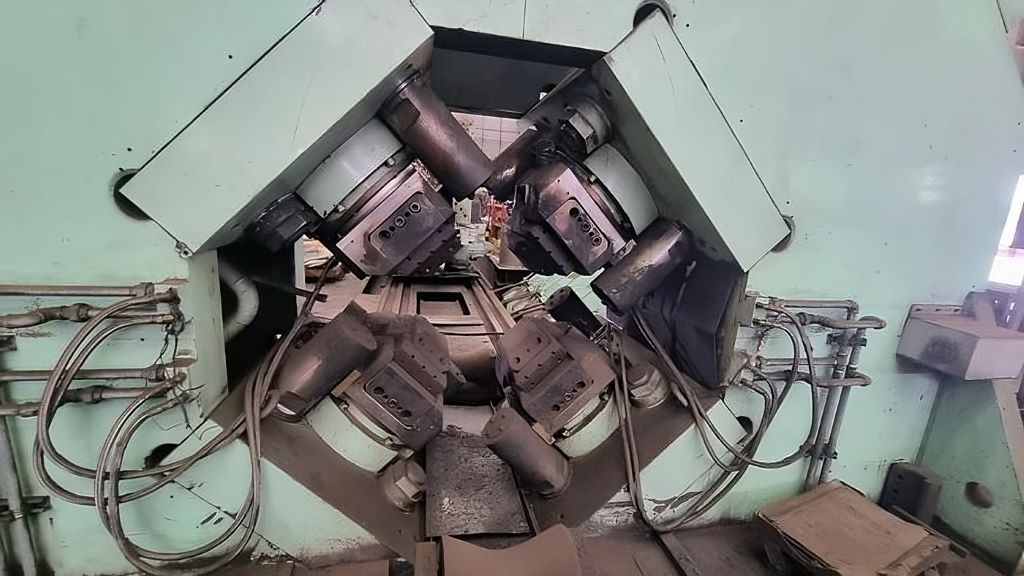
Neagari Shibuya BF-350 radial forging machine - description
Technical specifications Neagari Shibuya BF-350 (ID:76183)
| Type | Radial forging machine |
|---|---|
| Manufacturer | Neagari Shibuya |
| Model | BF-350 |
| Starting dimension | |
| Round max. diameter | 450 mm |
| Square max. flat to flat | 240 mm |
| Max. length | 3500 mm |
| Max. weight | 3000 kgf |
| Forged dimension | |
| Min. diamete | 80 mm |
| Min. square | 120 mm |
| Max. length | 8000 mm |
| Max. weight | 3000 kgf |
| Forging capability | |
| Number of rams | 4 |
| Ram force each | 714 tons |
| Hydraulic pressure max | 32 MPa |
| Opening width | 430 — 810 mm |
| All stroke length | 190 mm |
Radial forging machine Neagari Shibuya - technological processes and operations
| Forging | The process of plastic deformation of metal, in which the workpiece changes shape under the impact of blows or static pressure. During forging, the metal structure is densified, internal inhomogeneities are eliminated, and the mechanical properties of the material are improved. As a result, forged products are distinguished by high strength and reliability when operating under significant loads. Forging is used both for producing finished parts and for preparing workpieces for subsequent stamping. |
|---|---|
| Open-die forging | Metal is deformed between flat or shaped tools without lateral restriction, allowing free flow in all directions. The workpiece is gradually shaped by repeated blows or press strokes, with the operator controlling its position between each step. This method is used for producing large forgings such as shafts, discs, and rings, where a refined internal structure is essential. |
| Preforming | Preforming prepares the workpiece for the main stamping operation by giving it an approximate shape of the future part. The metal is distributed in the die to facilitate final filling and reduce tool wear. This intermediate step improves accuracy and quality of the finished product. |
| Radial forging | Several dies arranged radially around the workpiece deliver rapid blows from all sides simultaneously. The metal is compressed evenly while the workpiece is slowly fed forward. The result is a precise profile with an improved structure along the entire length. This approach is indispensable in the production of shafts, rods, and tubes made of alloy steels. |