



















Stamping press TMP Voronezh KB3732A — 160 ton

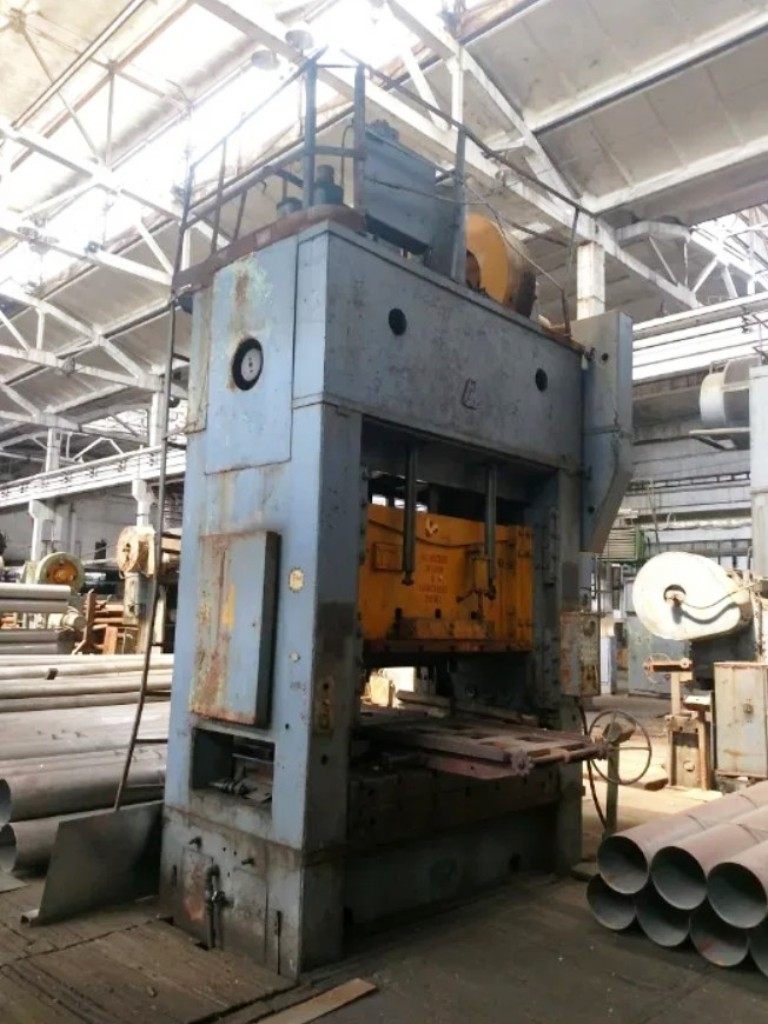
TMP Voronezh KB3732A stamping press - description
Technical specifications TMP Voronezh KB3732A (ID:75611)
| Type | Stamping press |
|---|---|
| Manufacturer | TMP Voronezh |
| Model | KB3732A |
| Nominal force | 160 ton |
| Ram stroke | 320 mm |
| Number of ram stroke per minute | 32 |
| Shut height | 750 mm |
| Bed to ram adjustment stroke | 200 mm |
| Bed dimensions | 2000 x 1250 mm |
| Ram dimension | 1000 x 1000 mm |
| Bolster plate thickness | 140 mm |
| Main drive motor power | 22 kW |
| Overall dimensions | |
| Floor space | 3380 x 2400 mm |
| Height above floor level | 5000 mm |
| Mass ton arrrox. | 28 tons |
Please note: Specifications are indicative and subject to final confirmation. For current availability and price, as well as photos and technical details, please contact us.
Stamping press TMP Voronezh - technological processes and operations
| Sheet stamping | Sheet stamping is a class of operations for forming parts from sheet material using dies. The workpiece is deformed in the tool without significant change in thickness, acquiring the specified shape. This group includes blanking, punching, bending, drawing, and other processes performed on presses. Sheet stamping is the foundation of mass production of body panels, housings, and other thin metal parts. |
|---|---|
| Drawing | Drawing turns a flat blank into a hollow product. The sheet is clamped at the edges while the tool presses the central part, forcing the metal to flow into the die cavity and form walls. This is how cups, caps, housings, and other parts with one open side are produced. |
| Punching | Punching holes in sheet metal is performed in a die: a tool with sharp edges passes through the workpiece, separating material along a closed contour. The process is fast and precise, leaving no burrs when properly set up. Used for producing holes, slots, and cutouts in sheet metal parts. |
| Blanking | Blanking a part from a sheet along a closed contour is performed on a press using a blanking die. The tool passes through the material, separating the finished part from the sheet. The accuracy of the contour and the cleanliness of the edge determine the quality of the final product. |
| Bending | Bending gives a sheet blank an angle or curvature. The metal is bent in the die under the force of the press: the outer layers stretch, the inner layers compress, and the middle retains its original length. The operation allows producing parts with the specified geometry without changing the material thickness. |