


















Forging upsetter Eumuco SMZE 8 — 80 ton

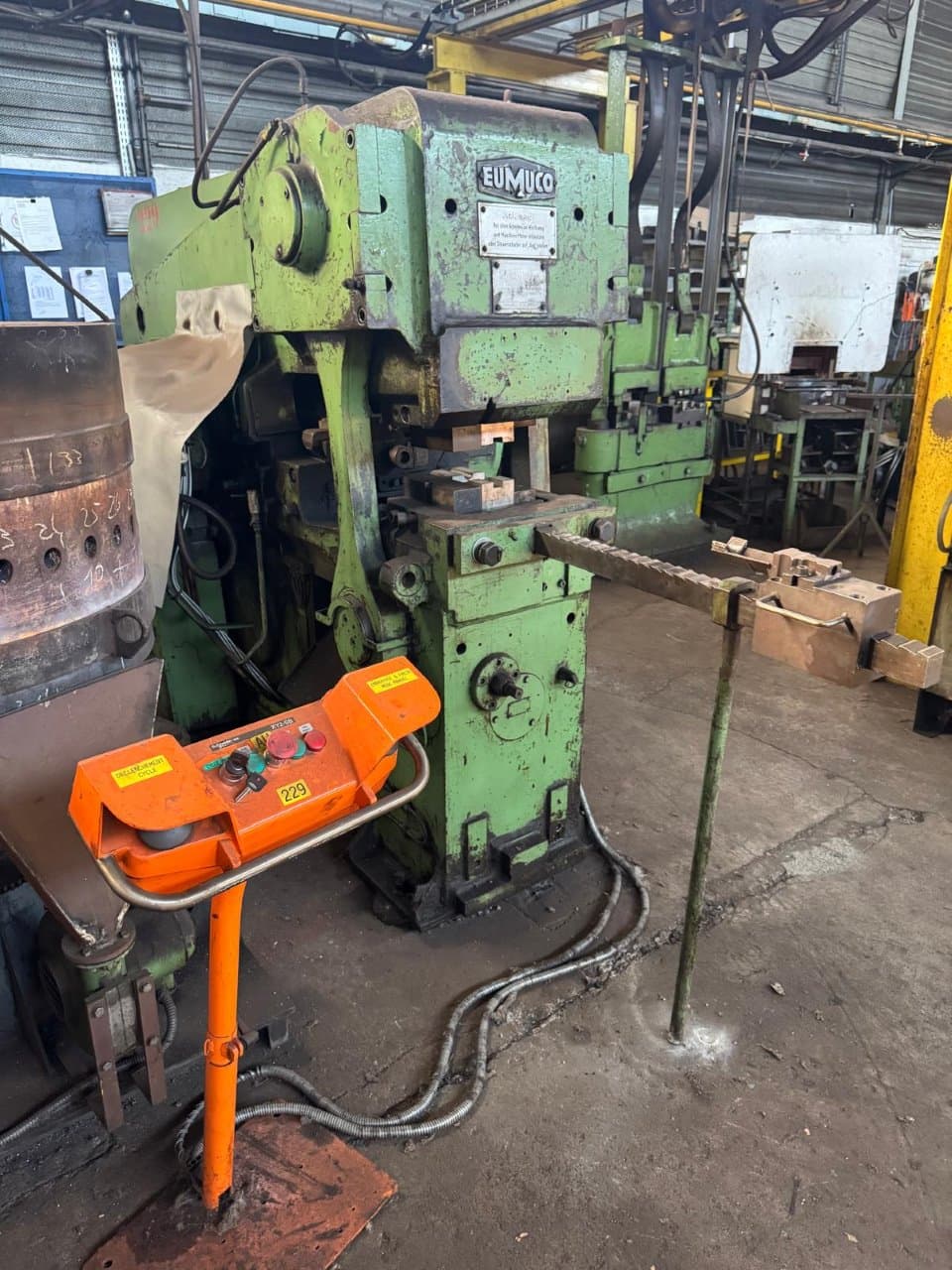
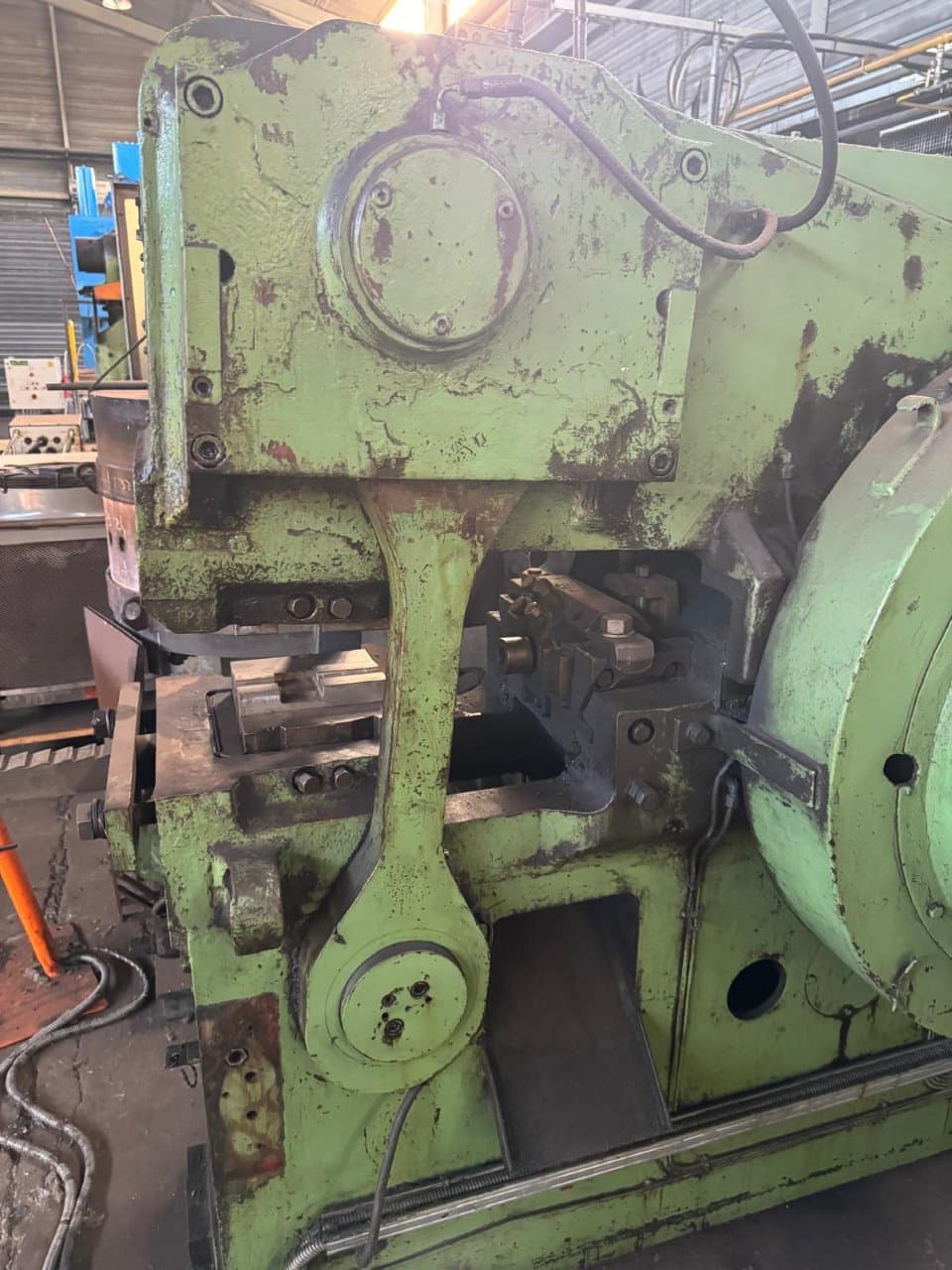
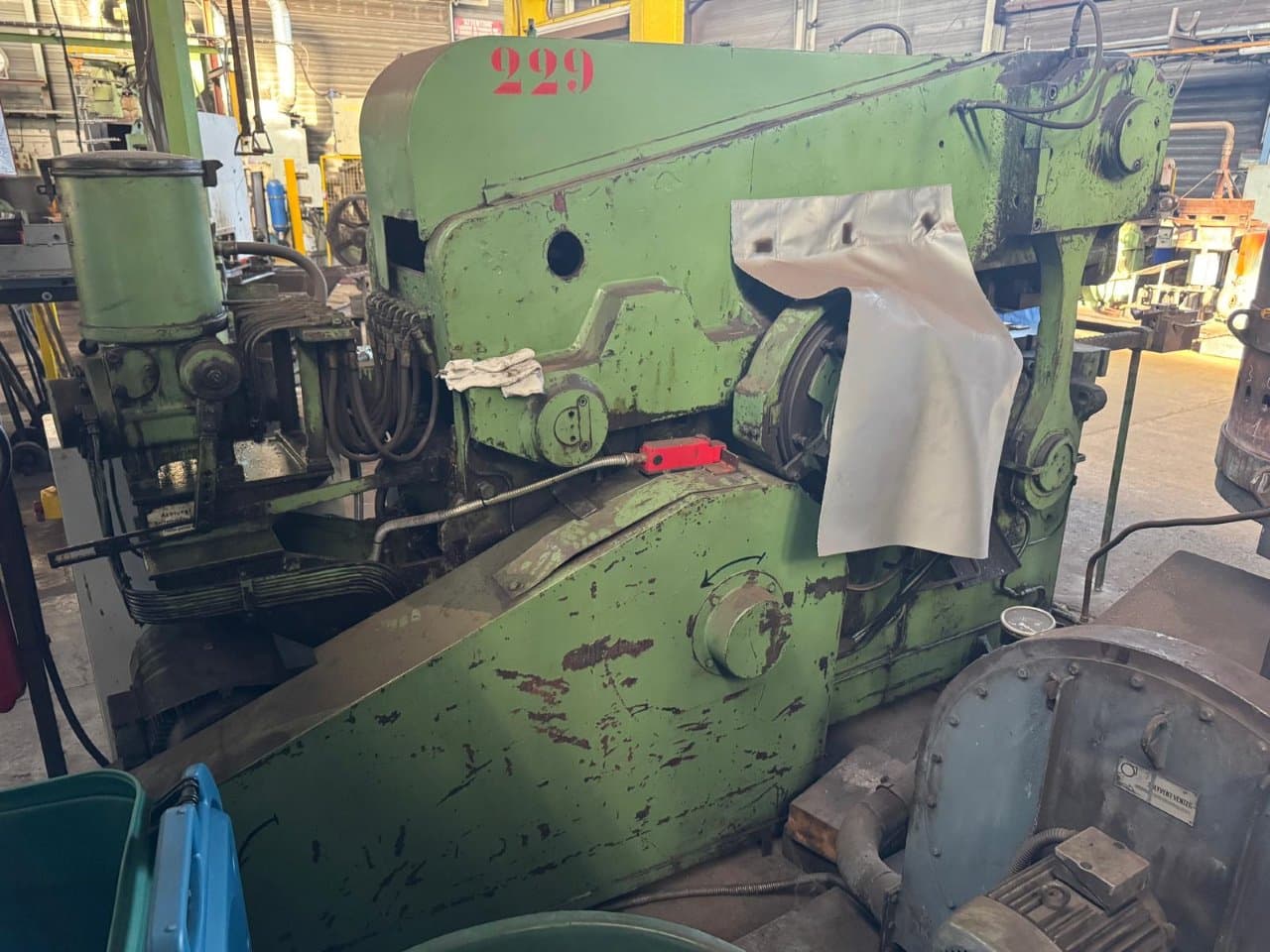
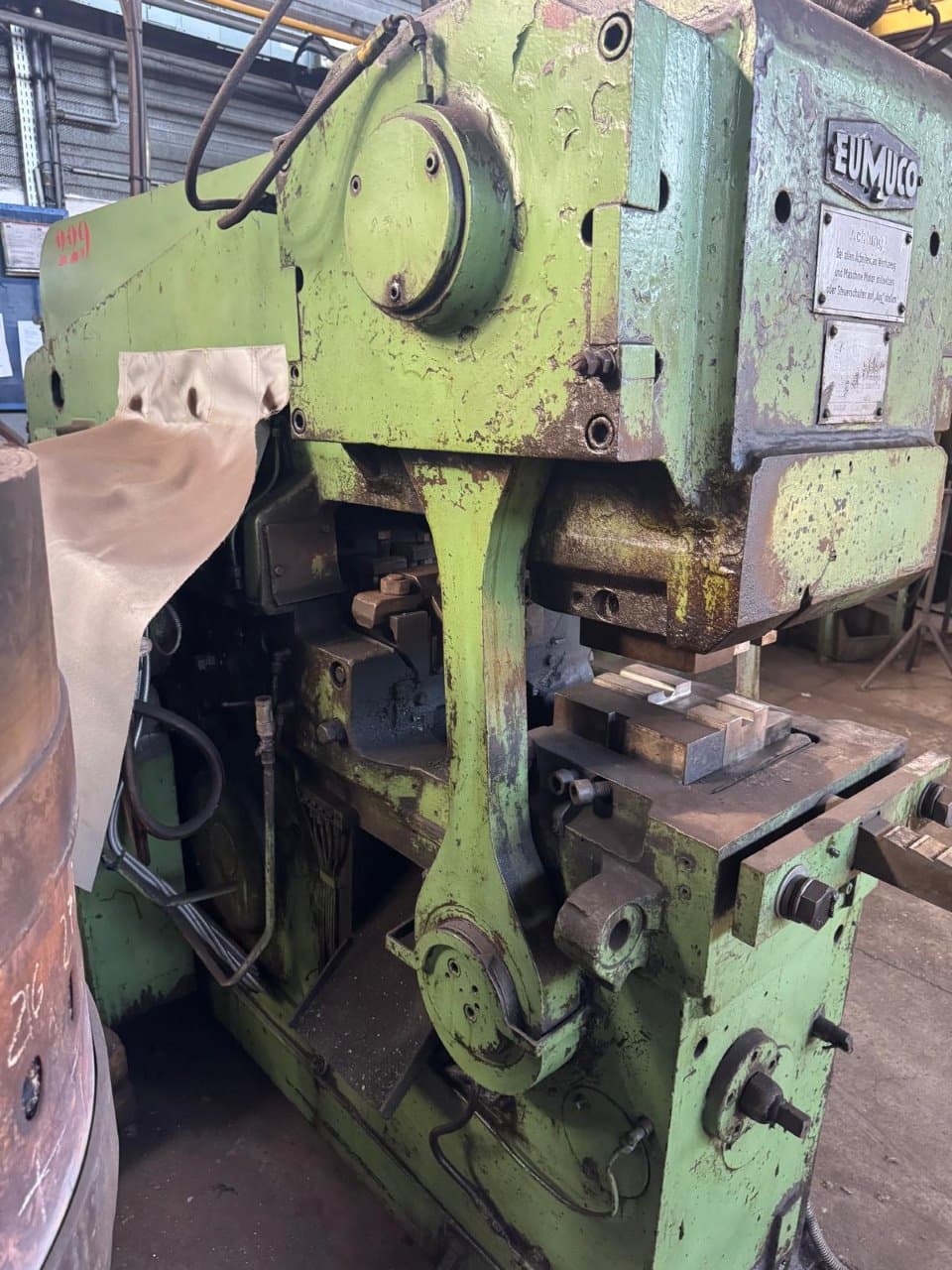
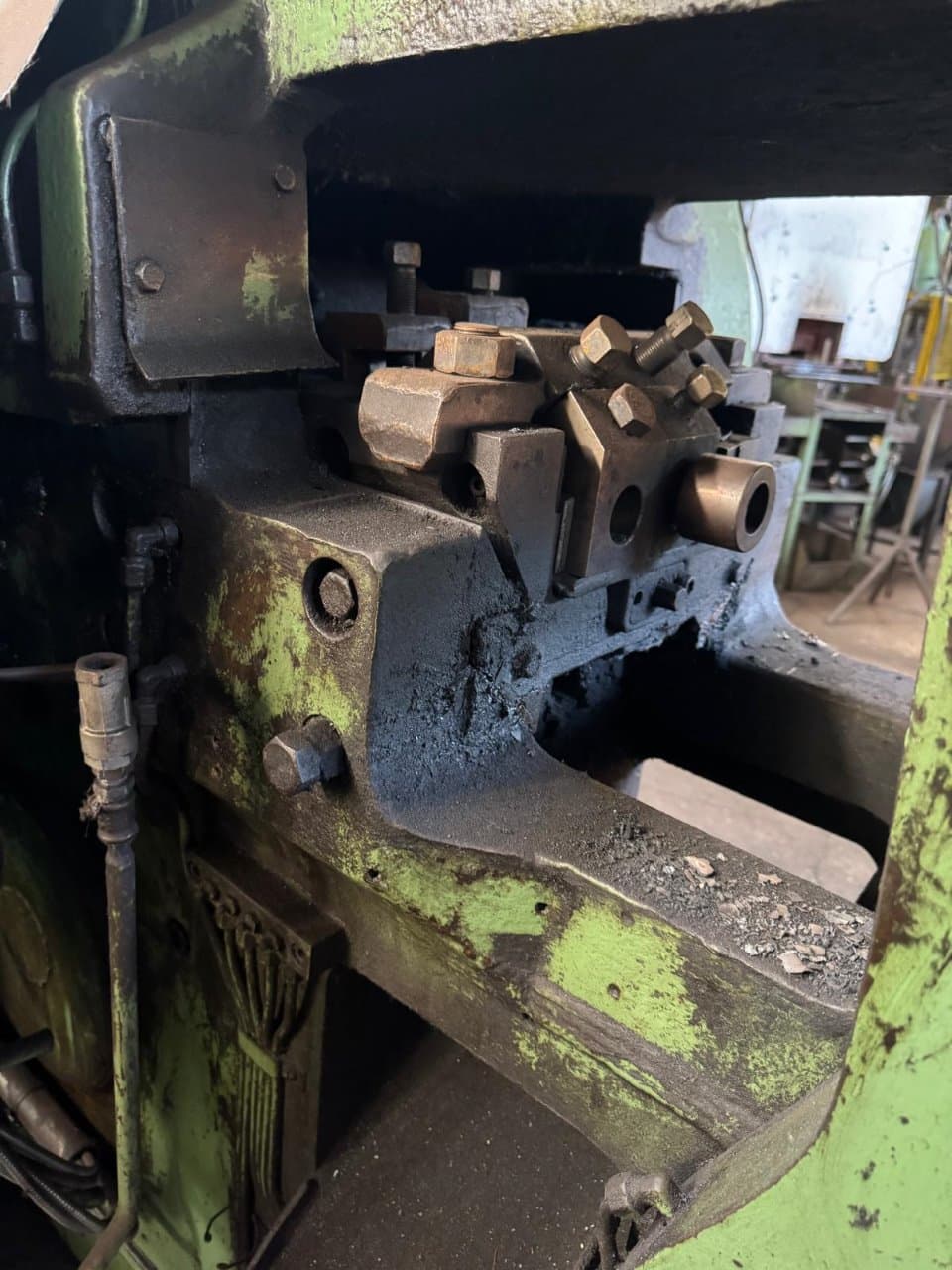
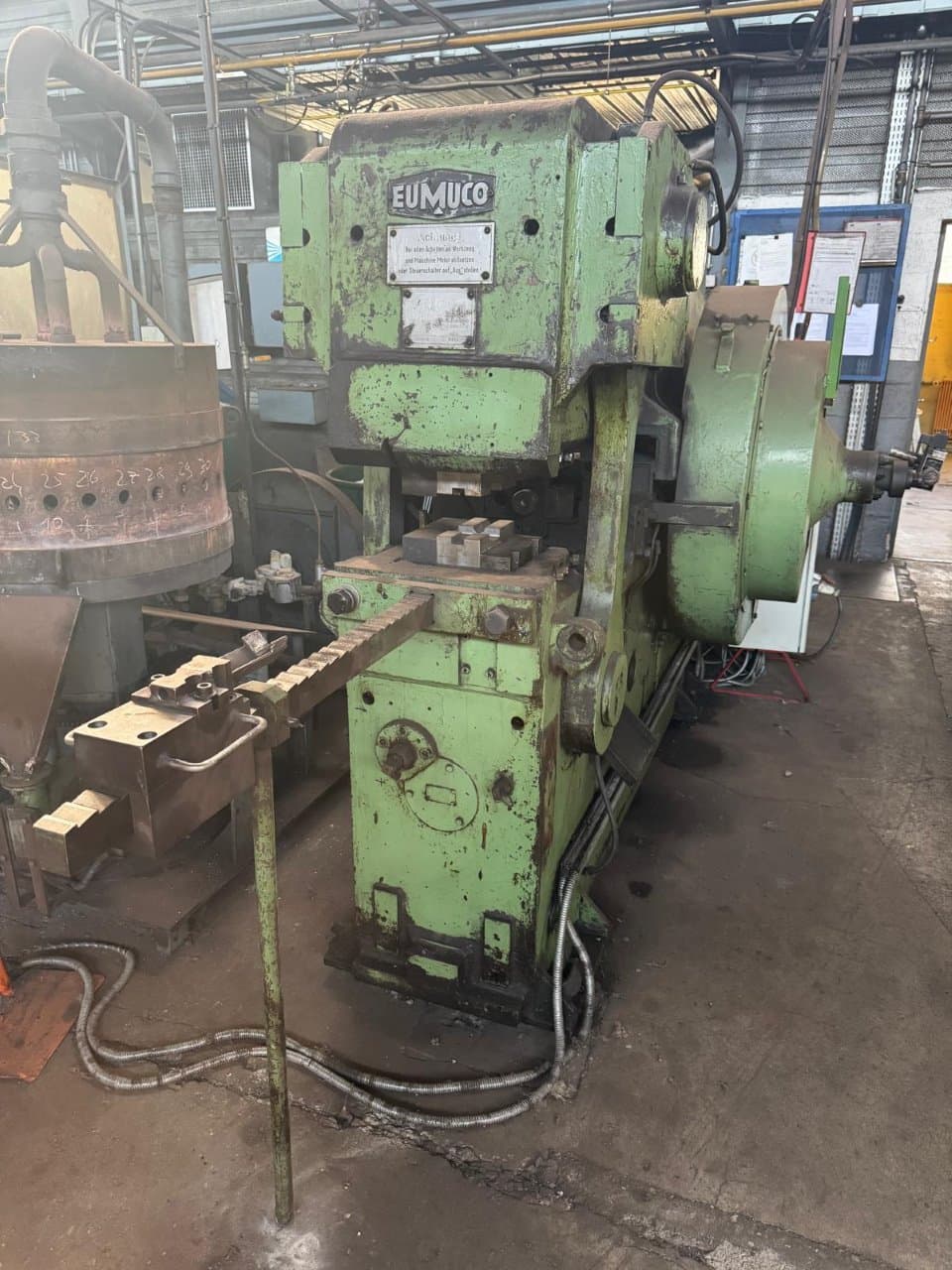
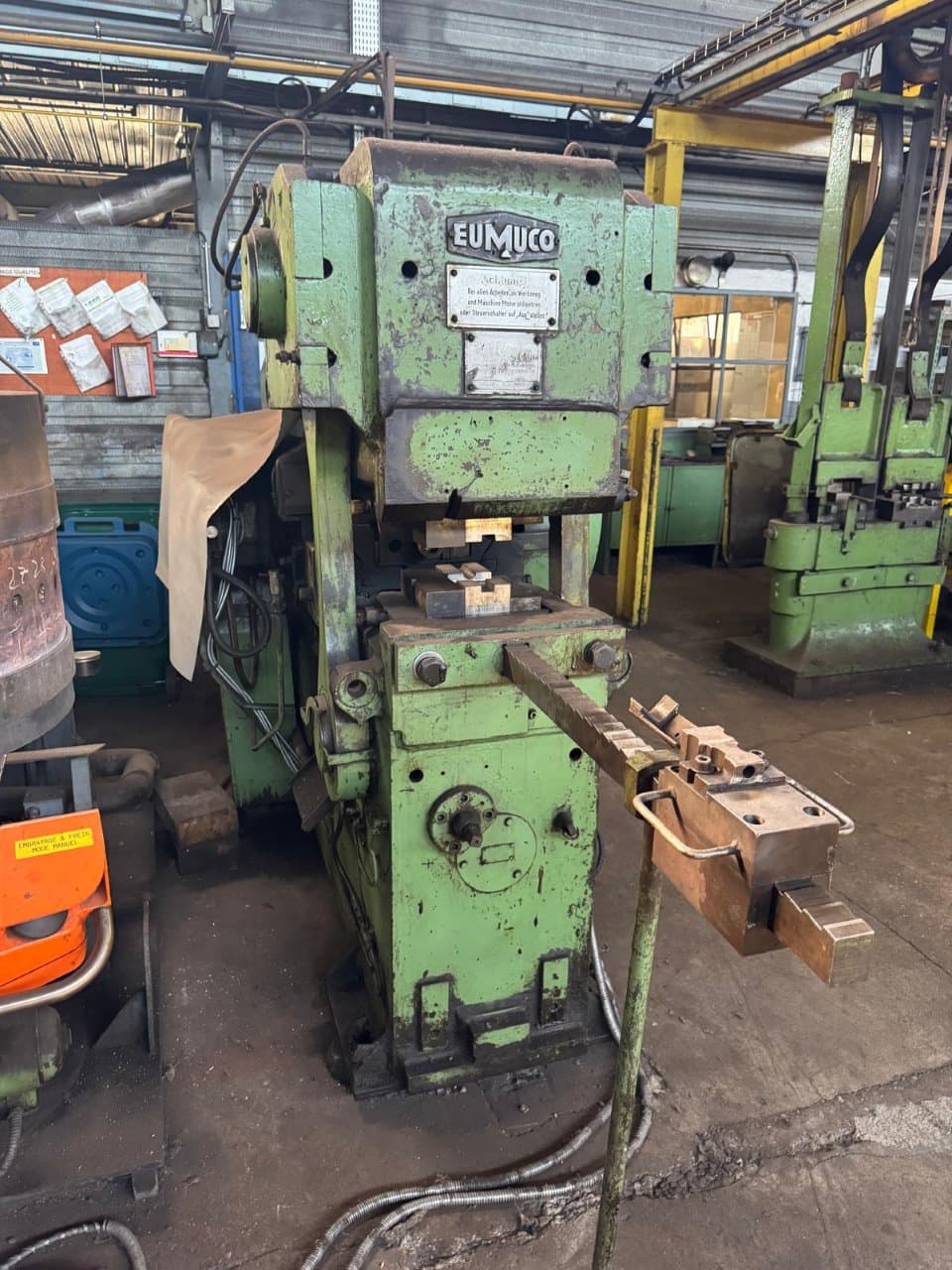
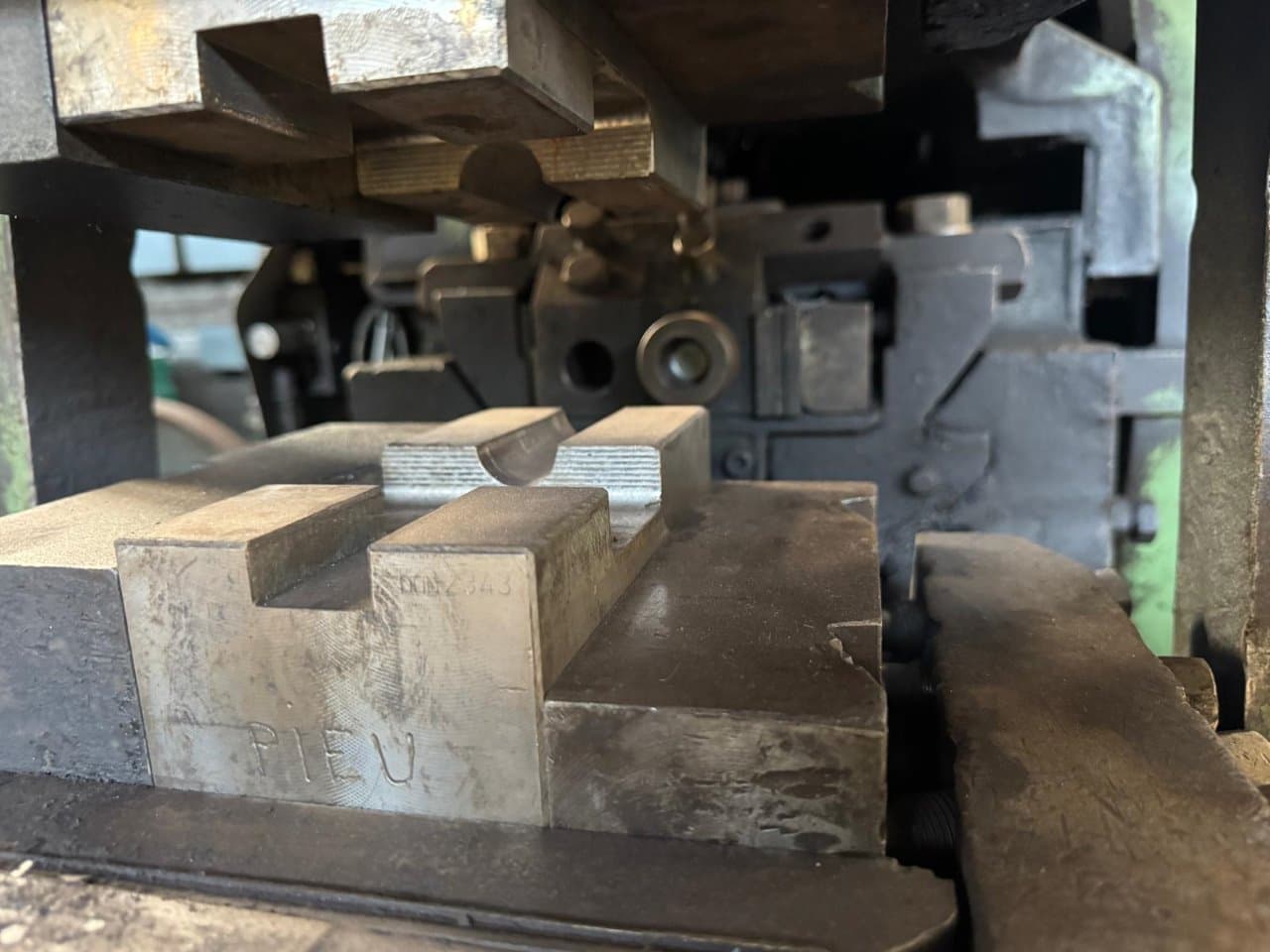
Eumuco SMZE 8 forging upsetter - description
Technical specifications Eumuco SMZE 8 (ID:76489)
| Type | Forging upsetter |
|---|---|
| Manufacturer | Eumuco |
| Model | SMZE 8 |
| Nominal force upsetting | 800 kN / 80 ton |
| Nominal force clamping | 800 kN / 80 ton |
| SPM | 75 |
| Maximum bar diameter | 30 mm |
| Stroke | 100 mm |
| Die opening | 80 mm |
| Die length | 220 mm |
| Die width | 250 mm |
| Die height | 100 mm |
| Motor power | 7,5 kW |
| Motor speed | 1500 rpm |
| Dimensions | 1640 x 2920 x 1890 mm |
| Total weight | 6.2 ton |
Please note: Specifications are indicative and subject to final confirmation. For current availability and price, as well as photos and technical details, please contact us.
Forging upsetter Eumuco - technological processes and operations
| Forging | The process of plastic deformation of metal, in which the workpiece changes shape under the impact of blows or static pressure. During forging, the metal structure is densified, internal inhomogeneities are eliminated, and the mechanical properties of the material are improved. As a result, forged products are distinguished by high strength and reliability when operating under significant loads. Forging is used both for producing finished parts and for preparing workpieces for subsequent stamping. |
|---|---|
| Preforming | Preforming prepares the workpiece for the main stamping operation by giving it an approximate shape of the future part. The metal is distributed in the die to facilitate final filling and reduce tool wear. This intermediate step improves accuracy and quality of the finished product. |
| Upsetting | Upsetting relies on the ability of metal to flow plastically under compression. When the workpiece is compressed from the end, the material moves outward, increasing the cross-section exactly where the part design requires. This is how bolt heads, flanges, collars, and stepped transitions are formed. The operation is performed on horizontal forging machines and presses, providing high accuracy and repeatability in the series production of fasteners and rod-type parts. |
| Heading | Forming a head on the end of a rod-type workpiece is a basic operation in the mass production of fasteners. The metal is upset axially and under pressure fills the die cavity, taking the shape of the future head. The process is carried out on cold heading machines and hot heading presses, providing high speed and minimal material consumption. The resulting blanks are used for bolts, rivets, studs, and other parts with a thickened end. |
| Punching | A hole in a solid workpiece is a task handled by bulk punching. The metal is not drilled out but pushed through: the punch penetrates the workpiece, displacing material sideways and forming a through or blind hole. The operation is performed on presses, keeping the metal structure around the hole intact. Used in the production of bushings, rings, and hollow shafts. |
| Piercing | Piercing forms a hole in a solid workpiece by driving a tool through the material without removing it. The metal is displaced sideways, creating a through or blind opening while preserving the structure around it. The operation is performed on presses and is used in the production of hollow parts such as bushings, rings, and shafts. |