










Forging hammer Huta Zygmunt MPM 1600 B — 1840 kgm


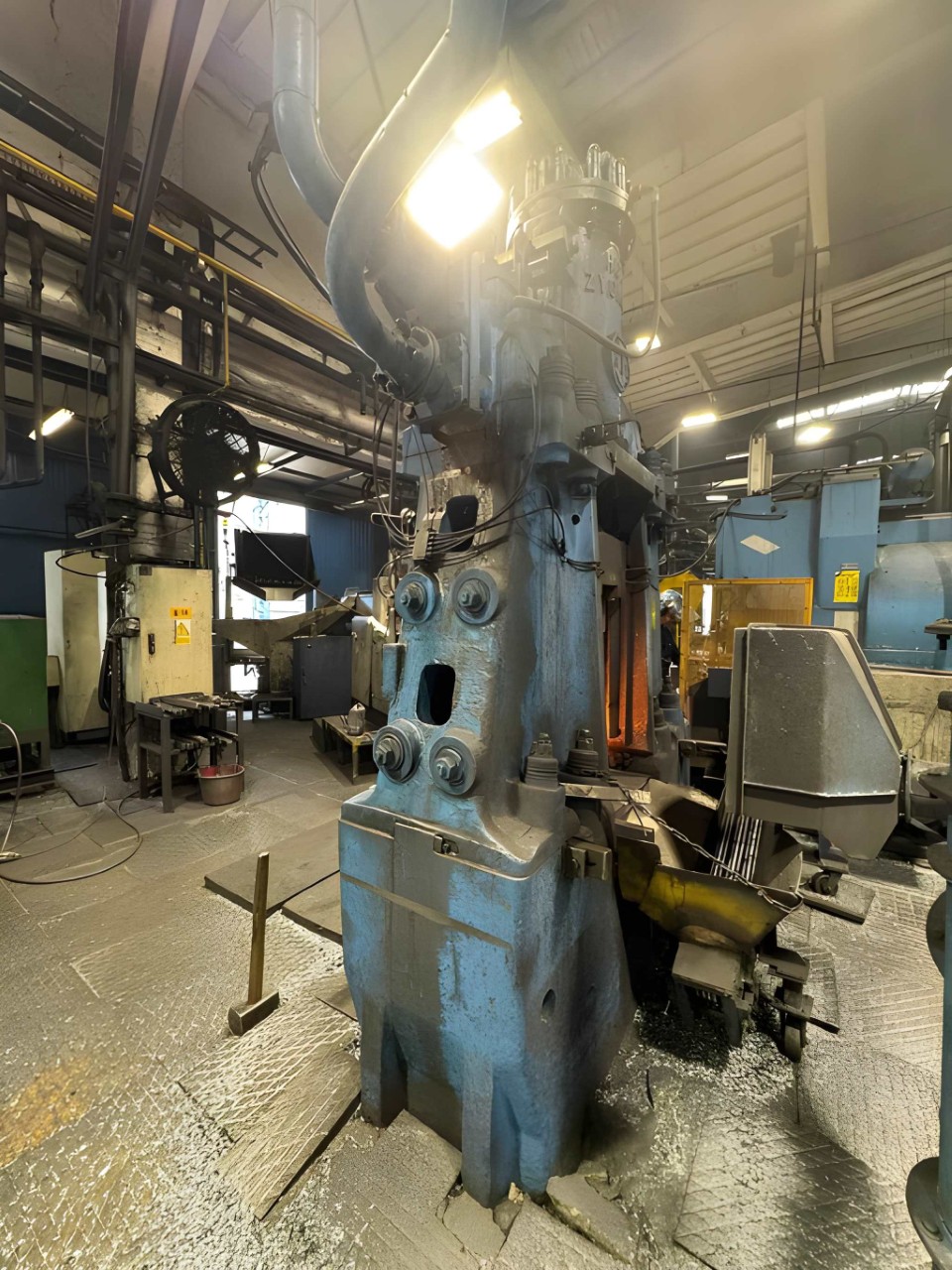
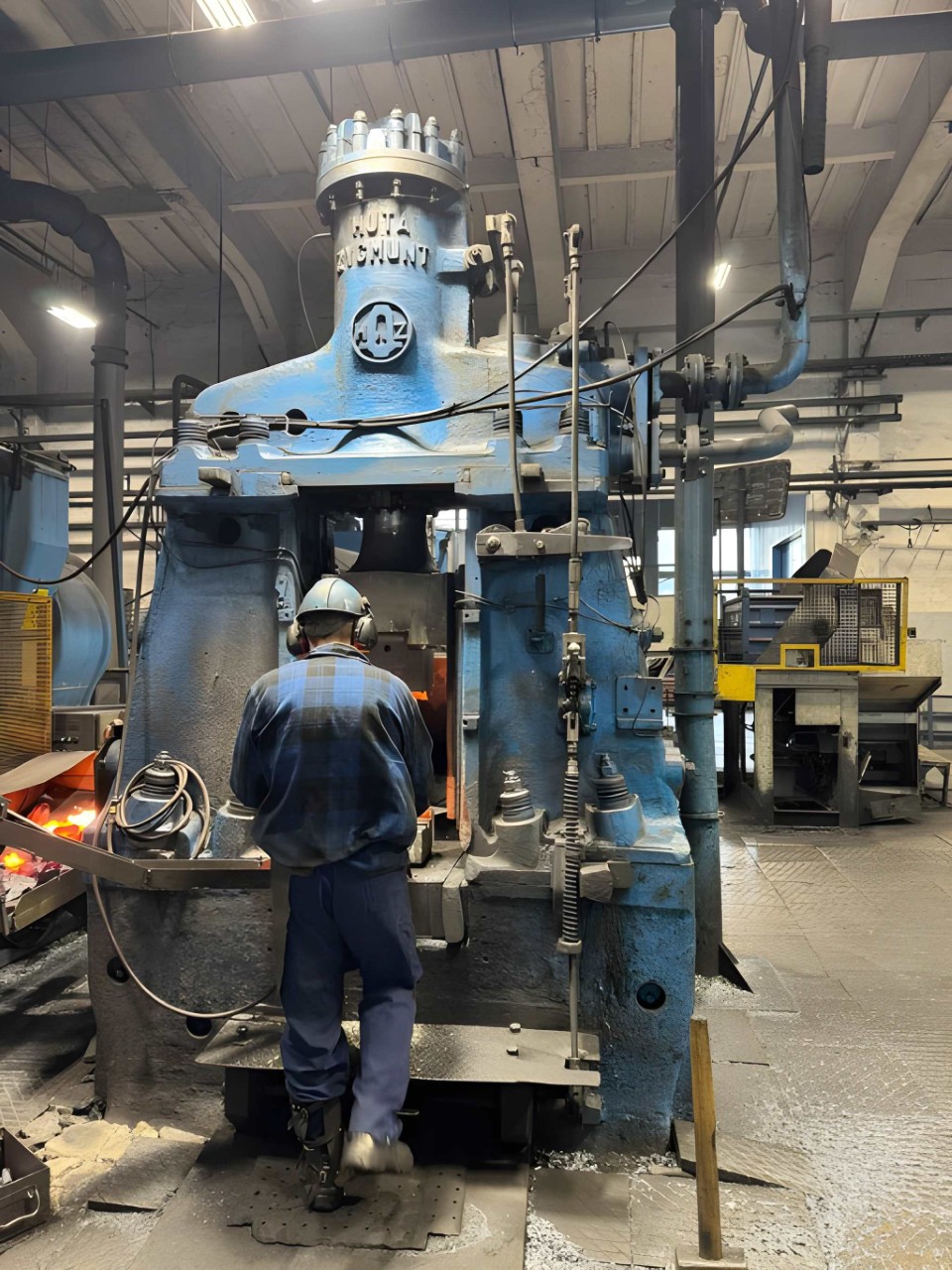
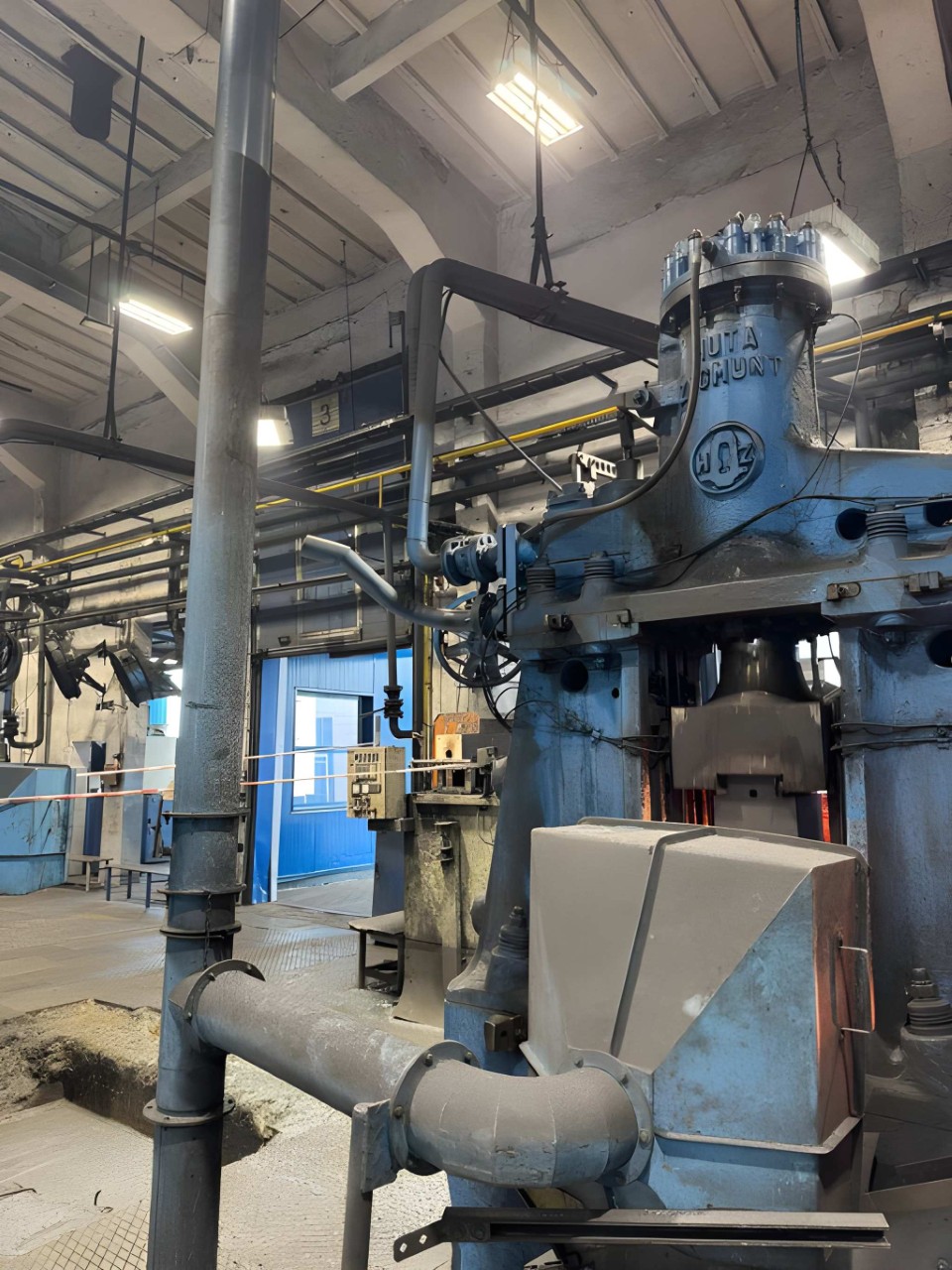
Huta Zygmunt MPM 1600 B forging hammer - description
Huta Zygmunt MPM 1600 B video (ID:76483)
Technical specifications Huta Zygmunt MPM 1600 B (ID:76483)
| Type | Forging hammer |
|---|---|
| Manufacturer | Huta Zygmunt |
| Model | MPM 1600 B |
| Year of manufacture | 1979 |
| Energy blow | 1840 kgm / 18,4 kJ |
| Blows per minute | 120 |
| Max ram stroke | 750 mm |
| Weight of falling parts | 690 kg |
| Max weight of upper die | 200 kg |
| Min die height | 180 mm |
| Distance between guides | 418 mm |
| Max width of working area | 450 mm |
| Length of the die seat in the ram | 400 mm |
| Length of the die seat in the die holder | 600 mm |
| Anvil weight | 12500 kg |
| Average steam consumption | 380 kg/h |
| Average air consumption cold | 10 m3/min |
| Average air consumption hot | 7 m3/min |
| Approximate forging weight | 0,5–1 kg |
| Height above floor level | 3440 mm |
| Min height of die partition above floor | 800 mm |
| Overall dimensions | 2100 x 1185 x 3850 mm |
| Total weight | 22000 kg |
Please note: Specifications are indicative and subject to final confirmation. For current availability and price, as well as photos and technical details, please contact us.
Forging hammer Huta Zygmunt - technological processes and operations
| Forging | The process of plastic deformation of metal, in which the workpiece changes shape under the impact of blows or static pressure. During forging, the metal structure is densified, internal inhomogeneities are eliminated, and the mechanical properties of the material are improved. As a result, forged products are distinguished by high strength and reliability when operating under significant loads. Forging is used both for producing finished parts and for preparing workpieces for subsequent stamping. |
|---|---|
| Hot forging | Hot forging is a process of shaping metal under pressure at elevated temperatures. Heating reduces the deformation resistance of the material, allowing it to flow more easily into the die cavity. The process provides high productivity and the ability to form complex shapes. Used for manufacturing forgings from steel and alloys in series and mass production. |
| Closed-die forging | The workpiece is deformed inside a die cavity that restricts metal flow, forcing it to fill the exact shape of the tool. Under high pressure, the material spreads into every recess and detail of the die, producing a part with precise geometry. This method provides high accuracy and repeatability, making it the standard for series and mass production of complex forgings. |
| Drop forging | A method of hot closed-die forging in which the workpiece is deformed by the energy of a falling ram. Under the impact, the metal fills the die cavity, reproducing its geometry and taking the shape of the finished part. The process is characterized by high productivity and repeatability, making it in demand in series and mass production. |